The global freelancing landscape has undergone a seismic shift. The traditional strategies that worked a few years ago—such as basic data entry, simple article writing, or standard logo design—are no longer sufficient to sustain a high-income freelancing career. The widespread integration of Artificial Intelligence (AI), automated platforms, and low-code/no-code ecosystems has raised the bar for digital service providers.
For freelancers in Pakistan, this transformation presents both a challenge and an unprecedented opportunity. With local economic pressures, inflation, and a fluctuating rupee, earning in foreign currencies like USD, EUR, or GBP has transitioned from a luxury to an absolute necessity. Pakistan remains one of the top countries globally in terms of the sheer number of freelancers, but the market is moving rapidly from low-ticket volume work to high-ticket specialized skills.
To remain competitive and build a highly profitable career in 2026, you must align your skillset with global market demands. This comprehensive guide outlines the highest-paying, most future-proof freelancing skills you can learn in Pakistan today, complete with learning paths, platform recommendations, and monetization strategies.
Why the Freelancing Landscape Changed in 2026
Before exploring specific skills, it is critical to understand why the market demands a new class of expertise.
- The AI Baseline: Basic tasks can now be completed by clients using generative AI tools within seconds. Freelancers are no longer hired just to “write a paragraph” or “crop a photo”; they are hired to provide strategic execution, contextual accuracy, and advanced human oversight that AI cannot replicate.
- The Rise of “Pre-Engineered” Solutions: Content management systems (CMS), automated marketing pipelines, and visual website builders mean clients look for integration specialists rather than developers who build everything from scratch.
- High-Ticket vs. Low-Ticket Dichotomy: The middle tier of freelancing is shrinking. You either compete at the bottom on price (which is an unsustainable race to the bottom) or specialize at the top as an expert where clients are willing to pay premium hourly rates ($50–$150+).
Top Freelancing Skills for 2026
1. AI Integration, Automation, & Prompt Engineering
Artificial Intelligence is not replacing freelancers; instead, freelancers who utilize AI are replacing those who do not. Clients are actively looking for specialists who can integrate AI systems into their existing business structures to cut operational costs.
- What it involves: Building custom AI workflows using tools like Make.com, Zapier, and LangChain; fine-tuning Large Language Models (LLMs) for specific corporate use cases; creating advanced prompt structures for content, data analysis, and customer service bots.
- Why it’s high-ticket: Businesses want to automate repetitive tasks (e.g., customer support, automated invoice processing, email marketing triaging) but lack the technical expertise to connect AI APIs to their systems.
- Where to learn: DeepLearning.AI, Coursera, free YouTube bootcamps on AI automation, and official OpenAI/Anthropic documentation.
- Income Potential: $40 – $120 per hour / $1,500 – $5,000 per project.
2. High-Conversion Copywriting & Content Strategy
While basic blog writing has been heavily commoditized by AI, premium copywriting that drives direct sales, builds brand equity, and navigates complex SEO frameworks is in exceptionally high demand.
- What it involves: Writing high-converting landing pages, sales funnels, email newsletter sequences, and scripting for high-engagement video content (TikTok, YouTube Shorts, Instagram Reels).
- Why it’s high-ticket: AI-generated text often sounds generic, repetitive, and lacks emotional resonance. Businesses need human writers who understand consumer psychology, localized nuances, and cultural hooks to convert readers into paying customers.
- Where to learn: Copyhackers, Hubspot Academy, the books of Robert Cialdini and David Ogilvy, and analyzing successful real-world digital marketing campaigns.
- Income Potential: $30 – $90 per hour / $500 – $3,000 per sales funnel sequence.
3. Next-Gen Video Editing & Short-Form Content Creation
The attention economy is entirely driven by video. Brands, influencers, corporations, and educational institutions are shifting budgets toward video-first marketing strategies.
- What it involves: Advanced pacing, micro-animations, sound design, visual hooks, kinetic typography, and multi-platform optimization for short-form content (Shorts/Reels/TikTok) as well as cinematic long-form YouTube documentaries or corporate advertisements.
- Why it’s high-ticket: Capturing and holding human attention in the first 3 seconds of a video is an analytical and creative science. Editors who understand engagement metrics and algorithmic behavior are highly valued by digital brands.
- Where to learn: Premiere Pro, DaVinci Resolve, CapCut Pro (Desktop), and specialized editing masterclasses on Skillshare or YouTube.
- Income Potential: $25 – $75 per hour / $300 – $1,500 per month per client for short-form content retainers.
4. Advanced No-Code/Low-Code Web Development
Traditional web development remains valuable, but the speed to market is critical for startups. No-code and low-code developers bridge the gap between high-level programming and rapid design execution.
- What it involves: Creating complex, scalable web applications and corporate websites using platforms like Webflow, Framer, Bubble, and Shopify Plus, often augmented with custom JavaScript or CSS code blocks.
- Why it’s high-ticket: Clients want beautiful, highly responsive, easily maintainable websites built in days rather than months, without paying the immense overhead of a full-stack software development agency.
- Where to learn: Webflow University, Framer Academy, Bubble Bootcamp, and interactive UX/UI design principles.
- Income Potential: $500 – $4,000 per complete website design and deployment.
5. Cyber Security Auditing & Cloud Management (AWS/Azure)
As businesses migrate entirely to digital infrastructures and remote operations, protection against data breaches, ransomware, and vulnerabilities is a paramount corporate concern.
- What it involves: Vulnerability assessments, penetration testing for web apps, cloud infrastructure security setups (Amazon Web Services, Microsoft Azure, Google Cloud Platform), and ensuring compliance with international data privacy laws (GDPR, CCPA).
- Why it’s high-ticket: A single data breach can cost a company millions of dollars and destroy its reputation. Companies will gladly pay freelance security consultants top dollar to secure their assets before a malicious attack occurs.
- Where to learn: CompTIA Security+, Certified Ethical Hacker (CEH) tracks, AWS Certified Solutions Architect courses, and platforms like Hack The Box or PortSwigger.
- Income Potential: $60 – $150+ per hour / Large scale enterprise cloud consulting contracts can range upwards of $10,000+.
6. Performance Marketing & Growth Hacking (E-commerce Specialists)
With platforms like TikTok Shop expanding globally alongside established giants like Amazon and Shopify, driving measurable traffic that converts into revenue is one of the most directly monetizable freelancing skills.
- What it involves: Managing highly targeted paid advertising campaigns across Meta (Facebook/Instagram), Google Ads, TikTok Ads, Pinterest, and running technical conversion rate optimization (CRO) audits.
- Why it’s high-ticket: This skill directly links your work to the client’s revenue. If you can spend $1,000 on ads and generate $5,000 in profitable sales for a client, your services become indispensable.
- Where to learn: Meta Blueprint Certification, Google Skillshop, Facebook Blueprint, and following real-world media buying case studies on Twitter/X or specialized marketing blogs.
- Income Potential: Base retainer of $500 – $2,000/month + percentage of ad spend or revenue share.
7. Data Analytics & Business Intelligence (BI)
Modern corporations are drowning in data but starving for insights. Freelancers who can translate raw metrics into actionable corporate strategies are highly sought after by executive teams.
- What it involves: Extracting, cleaning, and modeling complex datasets using SQL, Python, or R, and visualizing that data through interactive dashboards using Microsoft Power BI, Tableau, or Google Looker Studio.
- Why it’s high-ticket: Data-driven decisions prevent costly corporate mistakes. Executives use BI dashboards to optimize supply chains, target marketing efforts, and understand customer churn in real time.
- Where to learn: Google Data Analytics Professional Certificate (Coursera), Microsoft Power BI certifications, DataCamp, and Kaggle tutorials.
- Income Potential: $45 – $100 per hour / $2,000 – $6,000 per data pipeline architecture setup.
Comprehensive Skill Comparison Matrix
To help you decide which path aligns best with your background, time availability, and financial goals, look over this detailed comparison framework:
| Skill Development Domain | Difficulty Level | Time to Learn (Months) | Primary Platforms | Income Potential (Monthly Retainer) |
| AI Integration & Automation | Medium | 2 – 3 Months | Upwork, LinkedIn, Fiverr | $1,500 – $4,500 |
| High-Conversion Copywriting | Medium | 3 – 4 Months | Upwork, Cold Email, Twitter | $1,000 – $3,500 |
| Short/Long-Form Video Editing | Medium | 2 – 4 Months | Fiverr, Behance, YT Retainers | $800 – $2,500 |
| No-Code/Low-Code Dev | Medium | 3 – 5 Months | Upwork, Framer Experts, Agencies | $2,000 – $5,000 |
| Cyber Security & Cloud | High | 6 – 12 Months | Toptal, Upwork, Enterprise Contracts | $3,000 – $8,000+ |
| Performance Marketing (Ads) | High | 3 – 5 Months | Upwork, LinkedIn, Cold Outreach | $1,200 – $4,000+ |
| Data Analytics & BI | High | 4 – 6 Months | Upwork, Toptal, Corporate Projects | $1,500 – $5,000 |
Step-by-Step Roadmap to Launch Your Freelancing Career in Pakistan
Learning a skill is only half the battle. The other half is knowing how to package, position, market, and sell that skill to international clients while working from Pakistan. Follow this structured execution strategy:
Phase 1: Overcoming Local Operational Infrastructure Challenges
Before onboarding premium clients, you must ensure your local work ecosystem is stable and professional.
- Power & Internet Backup: Power outages can destroy your professional credibility. Invest in an efficient UPS system, a dedicated solar inverter system, or a secondary 4G/5G mobile hotspot device (e.g., Jazz, Zong) to ensure you never miss a client interview or project deadline due to infrastructure issues.
- Quiet Workspace: Set up a dedicated workspace free from domestic noise to handle professional voice calls and Zoom meetings smoothly.
Phase 2: Building a “Proof of Work” Portfolio
In 2026, degrees and certifications carry far less weight than tangible proof of work.
- Create Mock Projects: If you don’t have clients yet, invent them. If you are a Webflow developer, redesign a popular local website or a foreign startup’s landing page. If you are a video editor, download raw stock footage and cut together a compelling 60-second viral ad.
- Publish Openly: Host your portfolio on highly accessible, clean platforms like GitHub (for developers), Behance/Dribbble (for visual designers), or a personalized portfolio website built on Framer or Notion.
Phase 3: Optimizing Global Payment Solutions
Receiving foreign remittances into Pakistan has become significantly easier with modern fintech alternatives.
- Local Digital Wallets: Use services like Payoneer, Sadapay Business, and NayaPay to smoothly handle global payments and withdraw funds directly into your local Pakistani bank accounts at competitive currency exchange rates.
- Traditional Bank Accounts: Set up a dedicated freelancer digital account with major commercial banks (e.g., Meezan Bank, HBL, Alfalah) which offer streamlined verification processes for inward foreign remittances without demanding extensive tax paperwork up front.
Phase 4: Choosing the Right Client Acquisition Inbound Strategy
Do not rely exclusively on one marketplace. Diversification protects your business from sudden account suspensions or algorithmic updates.
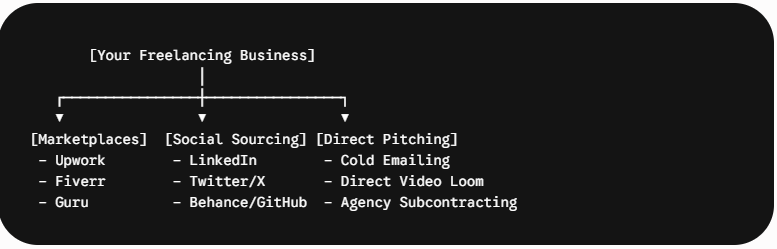
- Tier 1 (Platforms): Build optimized profiles on Upwork, Fiverr, and Guru. Focus your profile on a hyper-specific sub-niche (e.g., “Shopify Automation Specialist” instead of just “Web Developer”).
- Tier 2 (Social Sourcing): Optimize your LinkedIn and Twitter/X profiles. Regularly share educational breakdowns, case studies, or video walkthroughs of your design process. Clients often scout these platforms for top talent to bypass marketplace service fees.
- Tier 3 (Direct Outreach): Identify businesses in Western markets (USA, UK, Canada, Australia) that have clear, identifiable gaps in their digital presence (e.g., a slow website, weak social media presence, or unoptimized ad campaigns). Send them a personalized, 90-second video audit (using Loom or Vidyard) showing them exactly how you can solve their problem.
Non-Technical “Soft” Skills Essential for Success in 2026
Even if you are an expert programmer, writer, or designer, your income potential will be limited if you ignore these critical interpersonal attributes:
- Pristine Written & Verbal Communication: Your client communication must be clear, concise, and proactive. Use tools like Grammarly or deep learning translation assistance to refine your emails, proposals, and project update documentation.
- Business Acumen & Consulting Mindset: Shift your vocabulary from execution tasks to business metrics. Instead of saying, “I will edit a video for you,” say, “I will help you optimize your video assets to increase your average viewer retention rate by 20%.”
- Project Management Reliability: Consistently respect deadlines, structure tasks transparently using platforms like Notion, Trello, or Asana, and send regular, weekly progress reports to keep your clients informed.
Common Pitfalls to Avoid
As you begin your journey, avoid these common mistakes that often cause beginner freelancers to fail within their first year:
- The “Everything to Everyone” Trap: Generalists struggle to find high-paying work. If you try to offer graphic design, SEO, coding, and translation all on the same profile, clients will view you as an amateur. Pick one core domain, master it, and expand slowly over time.
- Ignoring Financial Management: Freelancing income is variable; you may earn $3,000 one month and $500 the next. Avoid immediate lifestyle inflation. Create a structured business budget, set aside funds for local taxes, and maintain an emergency reserve fund covering at least 3 to 6 months of your essential living expenses.
- Falling for “Get-Rich-Quick” Courses: Avoid expensive local seminars or online gurus promising overnight wealth through effortless copy-paste loops or automated trading hacks. High-value freelancing requires dedicated practice, continuous upskilling, and deep technical execution.
Final Thoughts
Freelancing in Pakistan in 2026 is no longer about finding quick, low-effort tasks. It is about building a sustainable, remote services business powered by deep technical expertise, modern AI efficiency, and elite communication skills.
The initial learning curve can feel challenging, particularly during the first 60 to 90 days of studying a new tech stack or design discipline. However, by selecting an in-demand niche, developing an outstanding portfolio of work, and managing your client acquisition channels professionally, you can successfully build a high-income digital career from Pakistan.
Identify the domain above that matches your natural analytical or creative strengths, dedicate yourself to structured daily study, and take your first step toward building your independence in the global digital economy today.